Context Steering, Telegraphed Combat & Attack-Token Encounters in Unity 6
Readable enemy and companion AI in Unity 6 using 8-ray context steering maps, FOV + line-of-sight hysteresis, telegraph/active/recovery state machines, and an encounter attack-token director.
- ai
- enemy
- npc
- steering
- patrol
- telegraph
- combat
- attack-tokens
- perception
- boss
When to Use & Field Best Practices
Great enemy and companion AI is legible, fair, and paced — never omniscient aimbots or rigid navmesh trains that dogpile the player simultaneously:
- 8-Ray Context Steering (Andrew Fray, *Game AI Pro 2*): Evaluate an
interest[8]array (dot product toward goal or tangent strafe ring) and adanger[8]array (Physics.SphereCastobstacle & hazard probes), mask slots wheredanger[i] > threshold, and blend the winning direction smoothly. Enemies glide around pillars and flank naturally without getting stuck on corners! - Perception Hysteresis & Last-Known Memory: Require both distance
≤ R_sight, conef · d ≥ cos(θ/2), and unobstructedPhysics.Raycastto acquire aggro, then holdlastSeenPosfor2.5 safter line-of-sight breaks so enemies investigate cover rather than flickering betweenPatrolandChase. - Explicit Telegraph → Active → Recovery Windows: Every attack winds up visibly (
0.35–0.65 spullback + emissive rim flash + audio cue) before activating its hitbox, followed by a punishableRecoverywindow (0.5–0.9 s). - Attack-Token Encounter Director: Limit simultaneous melee lunges/projectiles (
maxActiveAttackers = 2) while non-holders orbit on a strafe ring (preferredRadius = 4.5 m).
Mathematical & Algorithmic Core
- Context Map Slot Evaluation for 8 unit directions
u_i = (cos (2π i)/(8), 0, sin (2π i)/(8)): $I_i = max(0, u_i · g), D_i = max_o (1 - fracd_o,iR_probe), S_i = begincases 0 & D_i > 0.65 \\ I_i (1 - D_i) & otherwise endcases$ - Strafe Ring Interest: Blend radial error
(r - r_pref) / r_prefwith tangential orbit vector(-g_z, 0, g_x)so waiting enemies circle at readable spacing.
Engine Implementation
Context Steering + Token Director + Telegraphed Enemy (Assets/Game/Runtime/AI/EncounterDirector.cs)
using System.Collections.Generic;
using CCGD;
using UnityEngine;

namespace Game.AI
{
    public sealed class AttackTokenPool
    {
        readonly HashSet<int> holders = new HashSet<int>();
        public int MaxTokens = 2;

        public bool TryAcquire(int actorId)
        {
            if (holders.Contains(actorId)) return true;
            if (holders.Count >= MaxTokens) return false;
            holders.Add(actorId);
            return true;
        }

        public void Release(int actorId) => holders.Remove(actorId);
        public void Clear() => holders.Clear();
    }

    public static class ContextSteering
    {
        static readonly Vector3[] Dirs = BuildDirs();

        static Vector3[] BuildDirs()
        {
            var d = new Vector3[8];
            for (int i = 0; i < 8; i++)
            {
                float a = i * Mathf.PI * 0.25f;
                d[i] = new Vector3(Mathf.Cos(a), 0f, Mathf.Sin(a));
            }
            return d;
        }

        public static Vector3 Solve(Vector3 origin, Vector3 desiredDir, float probeRadius, float probeDist, int obstacleMask)
        {
            Vector3 flatGoal = new Vector3(desiredDir.x, 0f, desiredDir.z);
            if (flatGoal.sqrMagnitude < 1e-5f) return Vector3.zero;
            flatGoal.Normalize();

            Vector3 weighted = Vector3.zero;
            float total = 0f;
            for (int i = 0; i < 8; i++)
            {
                Vector3 u = Dirs[i];
                float interest = Mathf.Max(0.05f, Vector3.Dot(u, flatGoal));
                float danger = 0f;
                if (Physics.SphereCast(origin + Vector3.up * 0.6f, probeRadius, u, out RaycastHit hit, probeDist, obstacleMask, QueryTriggerInteraction.Ignore))
                {
                    danger = Mathf.Clamp01(1f - hit.distance / Mathf.Max(0.05f, probeDist));
                }
                if (danger > 0.7f) continue;
                float score = interest * (1f - danger);
                weighted += u * score;
                total += score;
            }
            return total > 1e-4f ? weighted.normalized : flatGoal;
        }

        public static Vector3 OrbitGoal(Vector3 selfPos, Vector3 targetPos, float preferredRadius, float orbitSign = 1f)
        {
            Vector3 toTarget = targetPos - selfPos;
            toTarget.y = 0f;
            float dist = toTarget.magnitude;
            if (dist < 1e-4f) return Vector3.forward;
            Vector3 radial = toTarget / dist;
            Vector3 tangent = new Vector3(-radial.z * orbitSign, 0f, radial.x * orbitSign);
            float radialWeight = Mathf.Clamp((dist - preferredRadius) / Mathf.Max(0.5f, preferredRadius), -1f, 1f);
            return (radial * radialWeight + tangent * 0.75f).normalized;
        }
    }

    public enum EnemyState { Patrol, Investigate, Strafe, Telegraph, Strike, Recover }

    [RequireComponent(typeof(CharacterController))]
    public sealed class TelegraphedEnemy : MonoBehaviour
    {
        public EnemyState State { get; private set; } = EnemyState.Patrol;
        public Vector3[] Waypoints = System.Array.Empty<Vector3>();
        public int ObstacleMask = ~0;

        CharacterController cc;
        AttackTokenPool pool;
        Transform target;
        Vector3 lastSeenPos;
        int wpIndex;
        float timer, memoryTimer;

        public void Configure(AttackTokenPool tokenPool, Transform playerTarget, Vector3[] patrolPoints)
        {
            cc = GetComponent<CharacterController>();
            pool = tokenPool;
            target = playerTarget;
            Waypoints = patrolPoints ?? System.Array.Empty<Vector3>();
        }

        public void StepAI(float dt)
        {
            if (cc == null) cc = GetComponent<CharacterController>();
            float moveSpeed = Tuning.Value("enemyMoveSpeed", 4.2f);
            float sightRange = Tuning.Value("enemySightRange", 14f);
            float telegraphSec = Tuning.Value("enemyTelegraphSec", 0.45f);
            float recoverSec = Tuning.Value("enemyRecoverSec", 0.65f);

            bool seesPlayer = CanSeeTarget(sightRange, 110f);
            if (seesPlayer)
            {
                lastSeenPos = target.position;
                memoryTimer = 2.5f;
            }
            else if (memoryTimer > 0f)
            {
                memoryTimer -= dt;
            }

            Vector3 moveDir = Vector3.zero;
            int id = GetInstanceID();

            switch (State)
            {
                case EnemyState.Patrol:
                    if (seesPlayer) { State = EnemyState.Strafe; break; }
                    if (Waypoints.Length > 0)
                    {
                        Vector3 wp = Waypoints[wpIndex % Waypoints.Length];
                        if (Vector2.Distance(new Vector2(transform.position.x, transform.position.z), new Vector2(wp.x, wp.z)) < 0.65f)
                            wpIndex = (wpIndex + 1) % Waypoints.Length;
                        moveDir = ContextSteering.Solve(transform.position, wp - transform.position, 0.35f, 2.2f, ObstacleMask) * 0.65f;
                    }
                    break;

                case EnemyState.Strafe:
                    if (!seesPlayer && memoryTimer <= 0f) { pool?.Release(id); State = EnemyState.Patrol; break; }
                    if (!seesPlayer) { State = EnemyState.Investigate; break; }
                    float dist = Vector3.Distance(transform.position, target.position);
                    if (dist < 3.6f && (pool == null || pool.TryAcquire(id)))
                    {
                        State = EnemyState.Telegraph;
                        timer = telegraphSec;
                        GameAudio.Play("telegraph", transform.position);
                        break;
                    }
                    Vector3 orbit = ContextSteering.OrbitGoal(transform.position, target.position, 4.2f, (id & 1) == 0 ? 1f : -1f);
                    moveDir = ContextSteering.Solve(transform.position, orbit, 0.35f, 2.2f, ObstacleMask);
                    break;

                case EnemyState.Investigate:
                    if (seesPlayer) { State = EnemyState.Strafe; break; }
                    if (memoryTimer <= 0f || Vector3.Distance(transform.position, lastSeenPos) < 0.8f) { State = EnemyState.Patrol; break; }
                    moveDir = ContextSteering.Solve(transform.position, lastSeenPos - transform.position, 0.35f, 2.2f, ObstacleMask) * 0.8f;
                    break;

                case EnemyState.Telegraph:
                    Face(target != null ? target.position : lastSeenPos, dt * 10f);
                    timer -= dt;
                    if (timer <= 0f) { State = EnemyState.Strike; timer = 0.22f; }
                    break;

                case EnemyState.Strike:
                    moveDir = transform.forward * 1.65f;
                    timer -= dt;
                    if (timer <= 0f) { pool?.Release(id); State = EnemyState.Recover; timer = recoverSec; }
                    break;

                case EnemyState.Recover:
                    timer -= dt;
                    if (timer <= 0f) State = seesPlayer ? EnemyState.Strafe : EnemyState.Patrol;
                    break;
            }

            if (moveDir.sqrMagnitude > 1e-4f) Face(transform.position + moveDir, dt * 8f);
            Vector3 motion = moveDir * moveSpeed + Vector3.down * 9.81f;
            cc.Move(motion * dt);
        }

        bool CanSeeTarget(float range, float fovDeg)
        {
            if (target == null) return false;
            Vector3 eye = transform.position + Vector3.up * 1.3f;
            Vector3 to = (target.position + Vector3.up * 1.0f) - eye;
            float d = to.magnitude;
            if (d > range || d < 1e-4f) return false;
            if (Vector3.Angle(transform.forward, to / d) > fovDeg * 0.5f) return false;
            return !Physics.Raycast(eye, to / d, d - 0.3f, ObstacleMask, QueryTriggerInteraction.Ignore);
        }

        void Face(Vector3 worldPoint, float rate)
        {
            Vector3 flat = worldPoint - transform.position;
            flat.y = 0f;
            if (flat.sqrMagnitude < 1e-5f) return;
            transform.rotation = Quaternion.Slerp(transform.rotation, Quaternion.LookRotation(flat), Mathf.Clamp01(rate));
        }
    }
}
Performance & Determinism Traps
- Never raycast 64 directions every frame per enemy: 8 context slots (
SphereCastup to2.2 m) takes< 0.03 msper actor and handles pillars, walls, and ledges cleanly. - Always release attack tokens on death/disable: Call
pool.Release(GetInstanceID())inOnDisable()so defeated enemies never starve the encounter token pool. - Keep telegraph durations in
Assets/Game/Resources/tuning.json: Declare"enemyMoveSpeed","enemySightRange","enemyTelegraphSec", and"enemyRecoverSec"with sane[min, max]bounds soaudit_gameand live playtest tuning stay synchronized.
Verification Checklist
- Write EditMode/PlayMode tests asserting
Patrol -> Strafe -> Telegraph -> Strike -> Recovertransitions and verifyingAttackTokenPoolcaps simultaneous strikers toMaxTokens. - Run
audit_gameto verify everyTuning.Value(...)knob and patrol path inlevel.jsonis valid.
Official references
- Andrew Fray (Game AI Pro 2, Ch. 18 — Context Steering: Behavior-Driven Steering at the Macro Scale)
- Craig Reynolds (GDC 1999 — Steering Behaviors For Autonomous Characters)
- DOOM 2016 Encounter Token Architecture (GDC 2017)
Playable Unity 6 games made with GameCrew
Launch a real browser build using this engine and inspect its controls or fork its project tree.
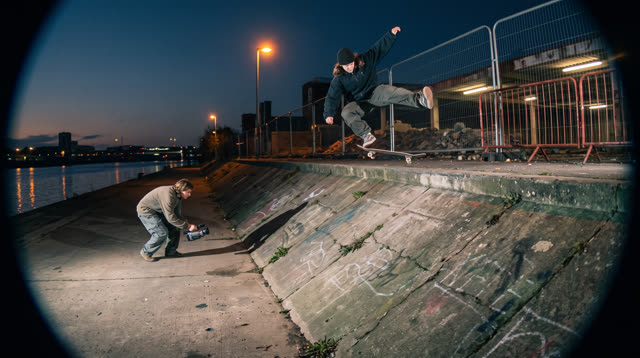
Kerbside
Every push, pop and scrape is earned: a grounded skateboarding game where your feet, not a button, do the trick, and a clean landing feels like the real thing.
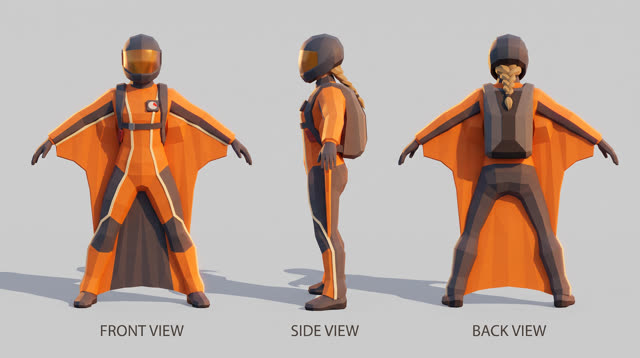
Fjordline
Leap from a granite wall under the midnight sun and carve one unbroken wingsuit line through Norway's most dramatic landscapes, from summit to sea, skimming close enough to touch the rock.
More Unity 6 techniques
Atmospheric Height Fog, Sun Shafts & Rim-Readable Lighting in Unity 6 URP →
Three-point outdoor/interior URP lighting recipe combining directional sun + warm/cool fill, exponential height/distance fog, ACES/Neutral post-processing, and anti-darkness floors so captures never read black or washed out.
Cel-Shading, Shadow Ramps & Width-Compensated Outlines in Unity 6 URP →
Two-pass URP stylized cel shader combining main-light shadow-attenuated diffuse ramps, crisp specular/rim accents, and clip-space distance-compensated inverted-hull outlines.
CharacterController Slope Projection & Floor Snap in Unity 6 →
Deterministic Unity 6 CharacterController locomotion with SphereCast ground projection, ramp stickiness, steep-slope slide, and coyote jumps.
GPU-Instanced Wind Foliage & Interactive Player Bend in Unity 6 URP →
Draw thousands of swaying grass blades, reeds, or wildflowers in 1–4 draw calls using Graphics.RenderMeshInstanced, URP instanced HLSL wind gusts, tip flutter, and player-sphere pushback.
Use verified techniques inside a real game
Describe your game idea for free or connect an MCP assistant to search and contribute techniques.