Kerbside
Every push, pop and scrape is earned: a grounded skateboarding game where your feet, not a button, do the trick, and a clean landing feels like the real thing.
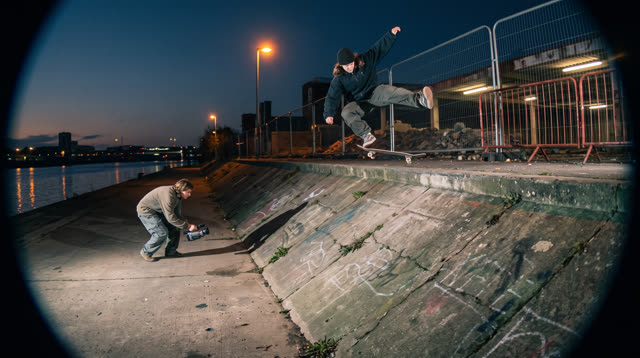
About Kerbside
Ines Varga, a twenty-something skater with one battered deck, has one Sunday dawn before the Halvard Street car park and its riverside plaza are fenced off for demolition. Her friend Teo has a borrowed camera and one battery. If she can link the spot's ledges, banks and the seven-stair into one clean line, the footage outlives the concrete.
Your role: You play Ines. Moment to moment you push for speed, carve to line up approaches, time your back-foot pop and front-foot slide to ollie or flip, lock into ledges and rails, and fight to land with wheels aligned to your direction of travel, scouting and retrying until a line comes together.
Automated verification proof
- Edit & structural checks: 548/548 passed
- Automated playtests: 5/5 passed
- Headless Chrome browser boot: verified (7.1 s)
Verified gameplay captures
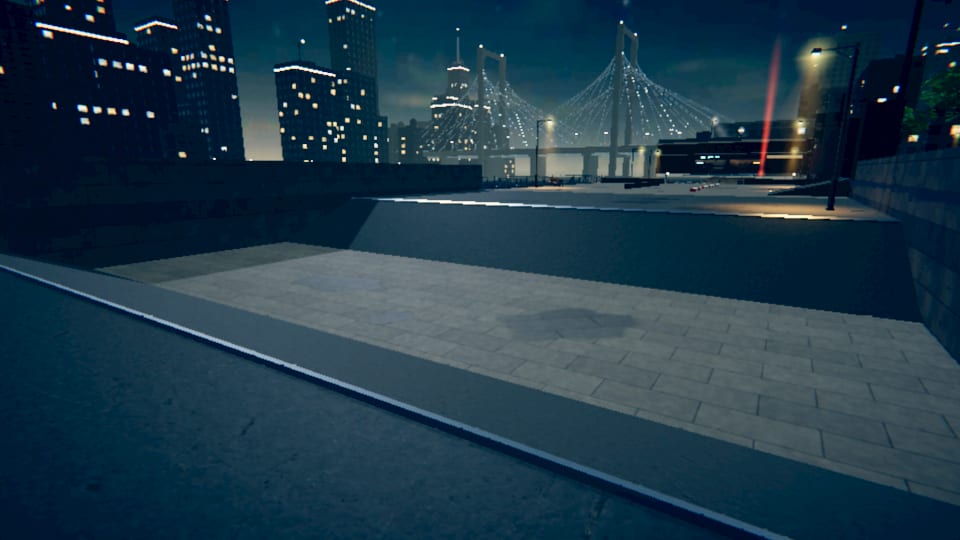
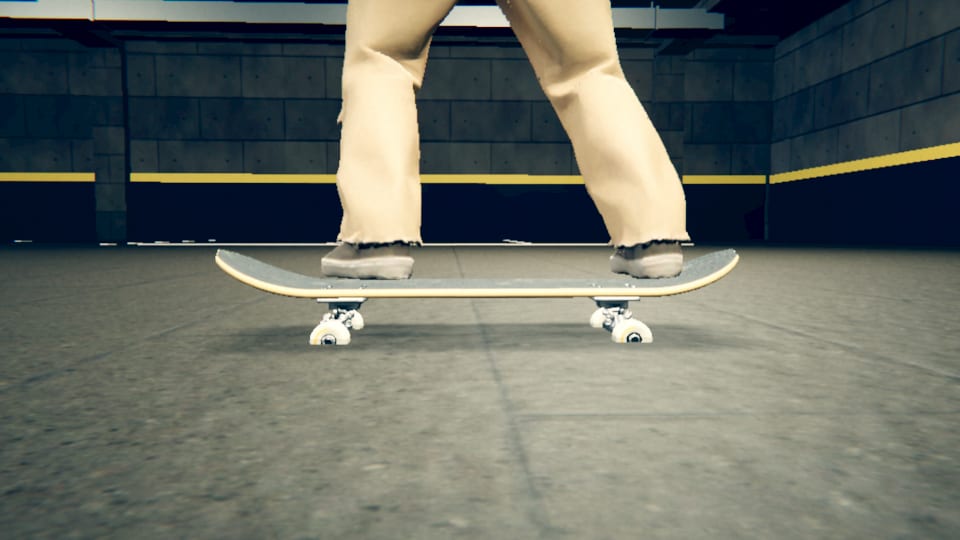
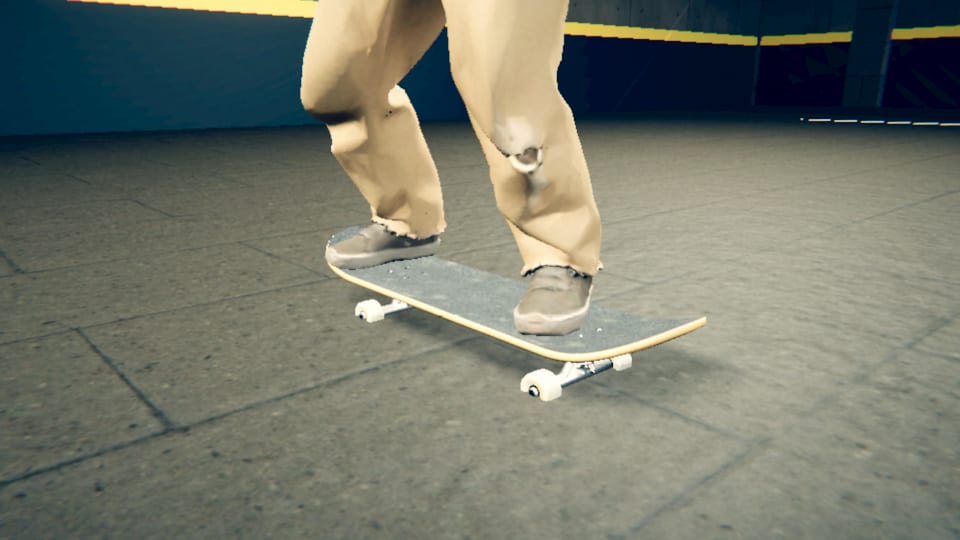
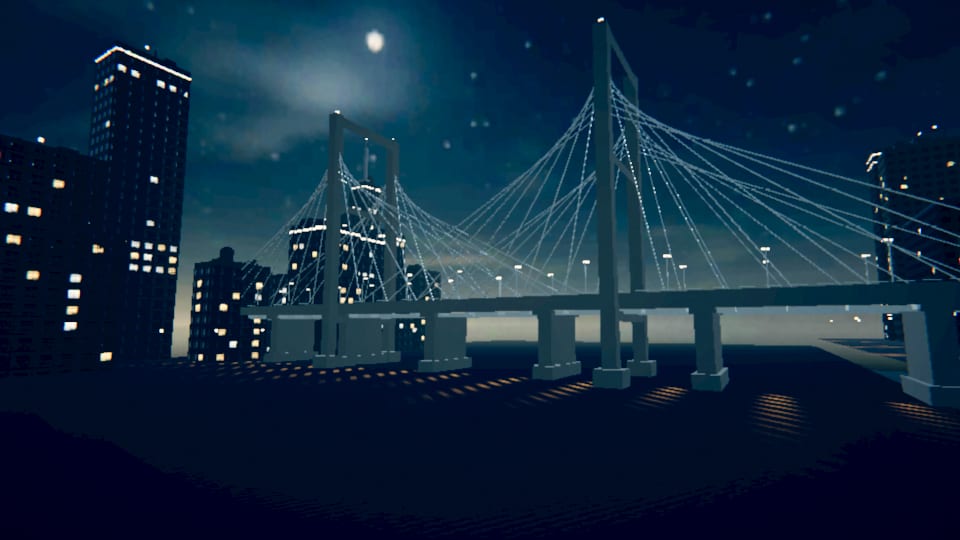
Core mechanics
- Weight and PushThe board is a rigidbody with real wheel friction, rolling resistance per surface (smooth paint, rough asphalt, cracked concrete) and lean-based steering through simulated truck geometry. Pushing adds momentum in pulses; tired rhythm loses speed. Speed is the currency every other mechanic spends: too slow and pops fall short, too fast and grinds overshoot.
- Two-Foot PopOllies are split into back-foot pop (right mouse) and front-foot slide (mouse drag). Pop height scales with crouch load and speed; the slide's timing levels the board. A sideways flick during the slide spins the board on its long axis using actual torque, so the board must be caught (release the drag) when grip faces up. Late or early timing gives a lower, tilted board that feeds directly into landing quality.
- Lock-In GrindsGrinds are not snapped: the truck or board contact point must reach a ledge or rail edge within tolerance, and the approach angle decides the trick (parallel = 50-50, angled tail = tailslide). Friction depends on the surface; waxing a ledge with a found wax bar lowers friction so slower lines become possible. Exiting requires a small pop, reusing the Two-Foot Pop input.
- Bolts and BailsLandings are judged physically: wheel alignment to velocity, board tilt and feet over bolts. Clean lands keep speed with a solid click; sketchy lands cost speed and wobble the camera; bad ones trigger a ragdoll bail. There is no score; Teo's camera records a take, and a line only counts if every element in it lands clean.
World & stages
- Level 2 Car ParkFlat painted concrete under a low ceiling teaches pushing rhythm, carving between pillars, braking and the basic two-foot ollie over parking bumpers of increasing height.
- Loading Dock LedgeA long chipped concrete ledge and a dock-edge drop teach lock-in angles, the difference between 50-50 and tailslides, and how finding and applying a wax bar changes friction.
- Drainage BanksTwo angled concrete banks across a dry channel test speed management on slopes, carving transitions and flipping off a bank lip where timing changes with incline.
- River Plaza SevenThe final plaza combines everything: a cracked run-up, a handrail-free seven-stair, and a waxed hubba beside it. With Teo filming, the player must link ledge, bank and stair into one clean take.
Controls
W: push (tap rhythm builds speed, holding pushes mongo-free steadily); S: drag foot to brake; A/D: lean heel/toe to carve; Shift: crouch to load the pop. Right mouse press: back foot pops the tail; mouse drag forward while airborne: front foot slides to level the board (ollie height depends on timing); flick mouse left/right during the slide: kickflip/heelflip; flick back: shove-it. Mouse in air: rotate shoulders for body rotation. Left mouse while near a ledge/rail: lock into grind/slide (truck position set by approach angle). Space: bail on purpose. R: reset to start of line. E: interact (pick up wax, toggle Teo filming). Tab: review last take.
Design pillars
- Physics decides, not animations: speed, angle and foot timing determine every outcome.
- Clean over flashy: a bolted landing matters more than a big trick name.
- The spot is the opponent: you read real-world surfaces, cracks and edges and adapt to them.
Open-licence asset credits
More games made with GameCrew

Make your own game with GameCrew
Describe a game in plain English — GameCrew writes the pitch, generates the art and 3D assets, and verifies a playable build.