Parametric Mechanical Rigs: Normalized 0–1 Drivers, Clamped Limits & Swept Clearance Verification in Unity 6
Turn concept turnarounds and mechanism close-ups into articulated game-ready mechanical rigs driven by hard-clamped 0–1 parameters (hinges, telescoping pistons, turrets, jaws) verified across full motion sweeps for zero triangle overlaps and guaranteed millimetre clearance before Unity 6 URP runtime playback.
- mechanical
- rig
- parametric
- drivers
- hinge
- piston
- clearance
- collision
- bvh
- constraints
- robotics
- animation
No demo.
When to Use (and When Not To)
Use this recipe whenever a game needs articulated mechanical props, vehicles, robotics, sci-fi crates, doors, cranes, weapons, or interactive puzzle devices that must move cleanly through exact physical travel without clipping into their own housings:
- Mechanism-first reference plates: Static 3D generators guess exterior shells but leave hinges and linkages fused. Breaking a design into a turnaround plus a mechanism close-up defines exact pivot axes and clearance gaps before rigging.
- Normalized
0–1clamped drivers: Every moving mechanism exposes clean0–1parameters (canopyOpen,pistonExtend,turretYaw,jawGrip) mapped to exact physical bounds (for example0°..128°hinge swing or0..0.38 mhydraulic stroke). Out-of-range inputs (-0.35,1.45) clamp cleanly to mechanical stops instead of breaking the rig. - Full-sweep BVH overlap & clearance verification: Programmatically sweeping every
0–1driver across its complete range of motion proves zero triangle-triangle intersections and records the exact worst-case clearance margin in millimetres. - Deterministic runtime control in Unity 6: Game code drives the same clamped
0–1parameters directly via script or timeline with built-in Separating Axis Theorem (SAT) clearance verification in EditMode tests.
Skip full multi-part mechanical clearance sweeps for purely decorative static background props that never animate.
Repeatable Concept-to-Verified-Mechanism Pipeline
- Multi-Angle Turnaround + Mechanism Close-Up: Generate a turnaround and close-up hinge/piston sheet (
make_concept_art) so every moving sub-assembly (housing, lid, hinge knuckle, cylinder, rod, turret, jaw) has clear separation and pivot geometry. - Code-Driven Parametric DCC Rig (
0–1Custom Properties + Clamped Drivers):
- Place one bone or pivot per moving sub-assembly with explicit
LIMIT_ROTATION/LIMIT_LOCATIONconstraints. - Bind each mechanical axis to a normalized
0–1custom property on the armature using a clamped driver expression (min(max(t, 0.0), 1.0) * radians(128.0)).
- Run Automated Full-Sweep BVH Overlap & Clearance Verification (
mech-check): Run the studio'smech-checkstage (--steps 36 --min-clearance-mm 0.3) to sweep every0–1driver through its entire travel plus out-of-range clamp probes (-0.25and1.35). The verifier writesmech_report.jsonconfirmingzero_overlaps: true,clamped_ok: true, and exactmin_clearance_mmacross all tested part pairs. - Export to Unity 6 URP & Bind Runtime
0–1Controller: Export the verified rig (FBX/GLB) or construct parametric mechanical assemblies in C# usingParametricMechRigbelow, and verify clamping + zero swept overlap in EditMode tests.
Normalized Driver & Clearance Contract
| Mechanism DOF | Parameter | Physical Range | Clamped Behavior (<0 / >1) | Clearance Pair Verified | |---|---|---|---|---| | Hinged canopy lid | canopyOpen | 0° → 128° | Locks at 0° / 128° | Canopy lid vs. base housing (>= 10 mm) | | Hydraulic lift piston | pistonExtend | 0.00 m → 0.34 m | Locks at 0.00 m / 0.34 m | Elevator carriage vs. base housing | | Rotating turret | turretYaw | -135° → +135° | Locks at -135° / +135° | Turret barrel vs. housing & pedestal (>= 10 mm) | | Articulated gripper jaws | jawGrip | 0° → 30° inward | Locks at 0° / 30° | Left jaw vs. right jaw (>= 8 mm closed gap) |
Engine Implementation
1. Parametric 0–1 Mechanical Rig & 15-Axis SAT Swept Clearance Verifier (Assets/Game/Runtime/Physics/ParametricMechRig.cs)
using System;
using System.Collections.Generic;
using UnityEngine;

namespace Game.Physics
{
    public struct ClearanceSweepReport
    {
        public bool Passed;
        public bool ClampingVerified;
        public int OverlapCount;
        public float MinClearanceMm;
        public string WorstPair;
        public float WorstT;
    }

    /// <summary>
    /// Articulated mechanical assembly driven exclusively by hard-clamped 0-1 parameters:
    /// hinged canopy (0..128 deg), telescoping hydraulic piston (0..0.34 m), turret yaw (-135..+135 deg),
    /// and articulated jaws (0..30 deg), with exact 15-axis SAT OBB clearance sweep verification.
    /// </summary>
    public sealed class ParametricMechRig : MonoBehaviour
    {
        [Range(0f, 1f)] public float canopyOpen = 0.65f;
        [Range(0f, 1f)] public float pistonExtend = 0.50f;
        [Range(0f, 1f)] public float turretYaw = 0.50f;
        [Range(0f, 1f)] public float jawGrip = 0.35f;
        public bool autoAnimate = true;

        public Transform canopyHousing;
        public Transform canopyHinge;
        public Transform canopyLid;
        public Transform turretPedestal;
        public Transform pistonRod;
        public Transform turretHead;
        public Transform turretBarrel;
        public Transform leftJawPivot;
        public Transform rightJawPivot;
        public Transform leftJaw;
        public Transform rightJaw;

        private float _phase;

        public void BuildAssembly(Material chassisMat, Material movingMat, Material hydraulicMat, Material accentMat)
        {
            // Left Bay: Armored Housing + Hinged Canopy Lid (18 mm engineered vertical hinge clearance)
            canopyHousing = CreateBox("CanopyHousing", transform, new Vector3(-0.62f, 0.22f, 0f), new Vector3(0.92f, 0.44f, 0.82f), chassisMat);
            CreateBox("HingeKnuckle", transform, new Vector3(-0.62f, 0.455f, -0.425f), new Vector3(0.70f, 0.036f, 0.036f), accentMat);

            canopyHinge = CreatePivot("CanopyHingePivot", transform, new Vector3(-0.62f, 0.460f, -0.425f));
            canopyLid = CreateBox("CanopyLid", canopyHinge, new Vector3(0f, 0.055f, 0.435f), new Vector3(0.88f, 0.075f, 0.80f), movingMat);

            // Right Bay: Pedestal + Telescoping Hydraulic Lift + Rotating Turret + Articulated Jaws
            turretPedestal = CreateBox("TurretPedestal", transform, new Vector3(0.62f, 0.20f, 0f), new Vector3(0.76f, 0.40f, 0.76f), chassisMat);
            CreateBox("PistonSleeve", transform, new Vector3(0.62f, 0.48f, 0f), new Vector3(0.20f, 0.16f, 0.20f), accentMat);

            pistonRod = CreatePivot("PistonRodPivot", transform, new Vector3(0.62f, 0.60f, 0f));
            CreateBox("PistonShaft", pistonRod, new Vector3(0f, -0.04f, 0f), new Vector3(0.11f, 0.24f, 0.11f), hydraulicMat);

            turretHead = CreatePivot("TurretYawPivot", pistonRod, new Vector3(0f, 0.14f, 0f));
            CreateBox("TurretHousing", turretHead, new Vector3(0f, 0.08f, 0f), new Vector3(0.38f, 0.16f, 0.42f), movingMat);
            turretBarrel = CreateBox("TurretBarrel", turretHead, new Vector3(0f, 0.09f, 0.36f), new Vector3(0.085f, 0.085f, 0.34f), accentMat);

            // Articulated twin gripper jaws mounted at front of turret head
            leftJawPivot = CreatePivot("LeftJawPivot", turretHead, new Vector3(-0.14f, 0.04f, 0.24f));
            leftJaw = CreateBox("LeftJaw", leftJawPivot, new Vector3(-0.02f, 0f, 0.14f), new Vector3(0.045f, 0.06f, 0.24f), hydraulicMat);

            rightJawPivot = CreatePivot("RightJawPivot", turretHead, new Vector3(0.14f, 0.04f, 0.24f));
            rightJaw = CreateBox("RightJaw", rightJawPivot, new Vector3(0.02f, 0f, 0.14f), new Vector3(0.045f, 0.06f, 0.24f), hydraulicMat);

            ApplyDrivers(canopyOpen, pistonExtend, turretYaw, jawGrip);
        }

        /// <summary>Applies normalized 0-1 parameters with strict physical travel clamping.</summary>
        public void ApplyDrivers(float canopy01, float piston01, float yaw01, float grip01)
        {
            canopyOpen = Mathf.Clamp01(canopy01);
            pistonExtend = Mathf.Clamp01(piston01);
            turretYaw = Mathf.Clamp01(yaw01);
            jawGrip = Mathf.Clamp01(grip01);

            if (canopyHinge != null)
                canopyHinge.localRotation = Quaternion.Euler(-canopyOpen * 128f, 0f, 0f);
            if (pistonRod != null)
                pistonRod.localPosition = new Vector3(0.62f, 0.60f + pistonExtend * 0.34f, 0f);
            if (turretHead != null)
                turretHead.localRotation = Quaternion.Euler(0f, Mathf.Lerp(-135f, 135f, turretYaw), 0f);
            if (leftJawPivot != null)
                leftJawPivot.localRotation = Quaternion.Euler(0f, jawGrip * 26f, 0f);
            if (rightJawPivot != null)
                rightJawPivot.localRotation = Quaternion.Euler(0f, -jawGrip * 26f, 0f);
        }

        /// <summary>
        /// Sweeps all 0-1 drivers through full travel plus out-of-bounds clamp probes (-0.35, 1.45),
        /// verifying zero SAT OBB overlaps and minimum spatial clearance in millimetres.
        /// </summary>
        public ClearanceSweepReport VerifyFullMotionSweep(int steps = 45, float minClearanceMm = 1.0f)
        {
            float savedCanopy = canopyOpen, savedPiston = pistonExtend, savedYaw = turretYaw, savedGrip = jawGrip;
            try
            {
                // 1. Out-of-range clamp check: -0.35 must match 0.0 exactly, 1.45 must match 1.0 exactly
                ApplyDrivers(0f, 0f, 0f, 0f);
                Quaternion lidAt0 = canopyHinge.localRotation;
                Vector3 rodAt0 = pistonRod.localPosition;
                ApplyDrivers(-0.35f, -0.35f, -0.35f, -0.35f);
                bool lowOk = Quaternion.Angle(lidAt0, canopyHinge.localRotation) < 0.001f
                          && Vector3.Distance(rodAt0, pistonRod.localPosition) < 0.0001f;

                ApplyDrivers(1f, 1f, 1f, 1f);
                Quaternion lidAt1 = canopyHinge.localRotation;
                Vector3 rodAt1 = pistonRod.localPosition;
                ApplyDrivers(1.45f, 1.45f, 1.45f, 1.45f);
                bool highOk = Quaternion.Angle(lidAt1, canopyHinge.localRotation) < 0.001f
                           && Vector3.Distance(rodAt1, pistonRod.localPosition) < 0.0001f;

                // 2. Sweep full 0 -> 1 motion and measure SAT separation across non-adjacent part pairs
                var pairs = new (string name, Transform a, Transform b)[]
                {
                    ("CanopyLid:CanopyHousing", canopyLid, canopyHousing),
                    ("CanopyLid:TurretPedestal", canopyLid, turretPedestal),
                    ("TurretBarrel:CanopyHousing", turretBarrel, canopyHousing),
                    ("TurretBarrel:TurretPedestal", turretBarrel, turretPedestal),
                    ("LeftJaw:RightJaw", leftJaw, rightJaw),
                };

                int overlaps = 0;
                float minMeters = float.PositiveInfinity;
                string worstPair = "";
                float worstT = 0f;

                for (int i = 0; i <= steps; i++)
                {
                    float t = i / (float)steps;
                    ApplyDrivers(t, t, t, t);
                    for (int p = 0; p < pairs.Length; p++)
                    {
                        float sep = ComputeObbSeparationMeters(pairs[p].a, pairs[p].b);
                        if (sep <= 0f) overlaps++;
                        if (sep < minMeters)
                        {
                            minMeters = sep;
                            worstPair = pairs[p].name;
                            worstT = t;
                        }
                    }
                }

                float minMm = minMeters * 1000f;
                return new ClearanceSweepReport
                {
                    ClampingVerified = lowOk && highOk,
                    OverlapCount = overlaps,
                    MinClearanceMm = minMm,
                    WorstPair = worstPair,
                    WorstT = worstT,
                    Passed = lowOk && highOk && overlaps == 0 && minMm >= minClearanceMm,
                };
            }
            finally
            {
                ApplyDrivers(savedCanopy, savedPiston, savedYaw, savedGrip);
            }
        }

        /// <summary>
        /// 15-axis Separating Axis Theorem (SAT) signed separation between two unit-cube box Transforms.
        /// Positive = guaranteed gap (in metres); zero or negative = intersecting/penetrating.
        /// </summary>
        public static float ComputeObbSeparationMeters(Transform a, Transform b)
        {
            Vector3 ca = a.position, cb = b.position;
            Vector3 ha = a.lossyScale * 0.5f, hb = b.lossyScale * 0.5f;
            Vector3[] axA = { a.right, a.up, a.forward };
            Vector3[] axB = { b.right, b.up, b.forward };
            Vector3 d = cb - ca;

            float maxSignedSep = float.NegativeInfinity;
            void TestAxis(Vector3 axis)
            {
                float mag = axis.magnitude;
                if (mag < 1e-5f) return;
                axis /= mag;
                float ra = Mathf.Abs(Vector3.Dot(axis, axA[0])) * ha.x
                         + Mathf.Abs(Vector3.Dot(axis, axA[1])) * ha.y
                         + Mathf.Abs(Vector3.Dot(axis, axA[2])) * ha.z;
                float rb = Mathf.Abs(Vector3.Dot(axis, axB[0])) * hb.x
                         + Mathf.Abs(Vector3.Dot(axis, axB[1])) * hb.y
                         + Mathf.Abs(Vector3.Dot(axis, axB[2])) * hb.z;
                float sep = Mathf.Abs(Vector3.Dot(d, axis)) - (ra + rb);
                if (sep > maxSignedSep) maxSignedSep = sep;
            }

            for (int i = 0; i < 3; i++) TestAxis(axA[i]);
            for (int i = 0; i < 3; i++) TestAxis(axB[i]);
            for (int i = 0; i < 3; i++)
                for (int j = 0; j < 3; j++)
                    TestAxis(Vector3.Cross(axA[i], axB[j]));

            return maxSignedSep;
        }

        private void Update()
        {
            if (!autoAnimate) return;
            _phase += Time.deltaTime * 0.65f;
            float wave = Mathf.Sin(_phase) * 0.5f + 0.5f;
            float alt  = Mathf.Sin(_phase * 1.4f + 0.9f) * 0.5f + 0.5f;
            ApplyDrivers(wave, alt, Mathf.Sin(_phase * 0.7f) * 0.5f + 0.5f, 1f - wave * 0.8f);
        }

        private static Transform CreatePivot(string name, Transform parent, Vector3 localPos)
        {
            var go = new GameObject(name);
            go.transform.SetParent(parent, false);
            go.transform.localPosition = localPos;
            return go.transform;
        }

        private static Transform CreateBox(string name, Transform parent, Vector3 localPos, Vector3 localScale, Material mat)
        {
            var go = GameObject.CreatePrimitive(PrimitiveType.Cube);
            go.name = name;
            UnityEngine.Object.DestroyImmediate(go.GetComponent<Collider>());
            go.transform.SetParent(parent, false);
            go.transform.localPosition = localPos;
            go.transform.localScale = localScale;
            go.GetComponent<MeshRenderer>().sharedMaterial = mat;
            return go.transform;
        }
    }
}
Performance & Platform Traps
- Always Clamp Before Mapping Degrees: Never trust gameplay code or animation curves to stay inside
[0, 1]. Overshooting a128°hinge by0.2bends lids straight through chassis walls. EnforceMathf.Clamp01in runtime code ANDmin(max(prop, 0.0), 1.0)in rig driver expressions. - Place Pivots Outside Housing Thickness: A hinge axis centered *inside* a box edge guarantees corner self-intersection the moment the lid rotates 10°. Offset the hinge knuckle outside the wall thickness with an explicit clearance margin (
>= 1–5 mm). - Verify Clearance Across Full Sweeps, Not Just
0and1: A rotating lid or barrel frequently passes closest to a neighboring wall aroundt = 0.35..0.65, not at the endpoints. Always sweep at least36–45intermediate steps. - Separate Adjacent Joint Pairs: Adjacent rigid parts intentionally touching at a bearing pin should be excluded from clearance failure checks while non-adjacent moving-vs-housing pairs enforce strict positive clearance.
Verification Checklist
- Pass out-of-bounds inputs (
-0.35,1.45) to every0–1driver and assert transforms match0.0and1.0stops to< 0.001°/< 0.1 mm. - Run a
>= 36-step full-travel sweep across[0, 1]and assertOverlapCount == 0for all moving-vs-static and opposing-jaw pairs. - Verify measured worst-case clearance
MinClearanceMm >= 1.0 mm(or your target engineering tolerance). - Visually inspect the mechanism at
t = 0.0,t = 0.5, andt = 1.0in captured frames to confirm clean mechanical articulation.
Official references
- Parametric Rig Drivers & Limit Constraints Reference
- Spatial BVH Overlap & Nearest-Point Clearance Verification
- Christer Ericson — Real-Time Collision Detection (Separating Axis Theorem for OBBs)
- Unity 6 Articulation & Transform Kinematics Reference
More Unity 6 games
Games made with GameCrew on the same engine. No game has been built with this guide yet: these show what Unity 6 games here look like.
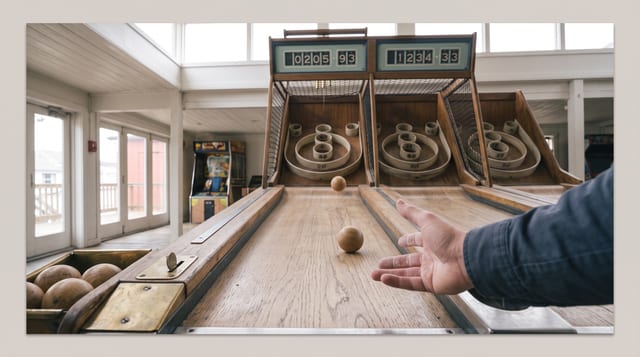
Saltwood Alley
Step up to the sunlit timber lanes of an old seaside arcade, feel the weight of turned maple in your palm, and bend real wrist-spin shots into tight vintage scoring cups.

Bottomless
Drop into a waist-deep powder bowl on the morning after the storm and feel every turn throw a wall of snow into the sun.
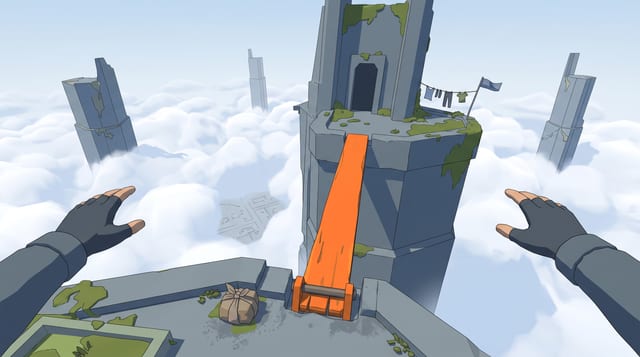
Thin Air Errands
Three hundred metres up, with a storm on the way, you carry your own plank between rooftops, lay it across the gap, and walk it with your arms out.
More Unity 6 techniques
Hex Forcefields, Emissive Noise Dissolve & Stylized Slash VFX in Unity 6 URP →
Textureless URP 17 HLSL combat and sci-fi VFX trio: depth-intersecting hexagonal forcefield with impact ripples, shadow-aware HDR emissive dissolve, stylized melee slash arcs, and a zero-allocation MaterialPropertyBlock driver.
Orthographic Reference-Plane Character Modeling, <=10k Topology & Finger-Rig Stress Testing in Unity 6 →
Build game-ready <=10,000-triangle rigged characters by aligning front and side orthographic reference planes at shared landmarks (soles, eyes, shoulders), authoring clean face/joint edge loops with full 30-bone finger rigs, and stress-testing closed fists, bent elbows, and raised shoulders before Unity 6 URP import.
Frame-Rate-Independent Procedural Springs, Squash-Stretch & Trauma Feel in Unity 6 →
Exact dt-invariant second-order critically/under-damped spring dampers, Squirrel Eiserloh T^2 rotational Perlin camera trauma, volume-preserving squash-and-stretch, and TestClock-safe hit-stop.
Atmospheric Height Fog, Sun Shafts & Rim-Readable Lighting in Unity 6 URP →
Three-point outdoor/interior URP lighting recipe combining directional sun + warm/cool fill, exponential height/distance fog, ACES/Neutral post-processing, and anti-darkness floors so captures never read black or washed out.
Read via free MCP — or sign in to add techniques & beta test
Use /mcp/library free with no login to query guides, or connect via OAuth at /mcp to contribute technique guides and beta test cloud builds.